Diia

This website is in test mode
We apologise for any temporary inconvenience. The information on this website is continually updated and expanded.

We apologise for any temporary inconvenience. The information on this website is continually updated and expanded.
This is about more than food. These are places to communicate, meet, rest and spend leisure time. It is important that everyone can enter an establishment freely, use its services and feel confident.
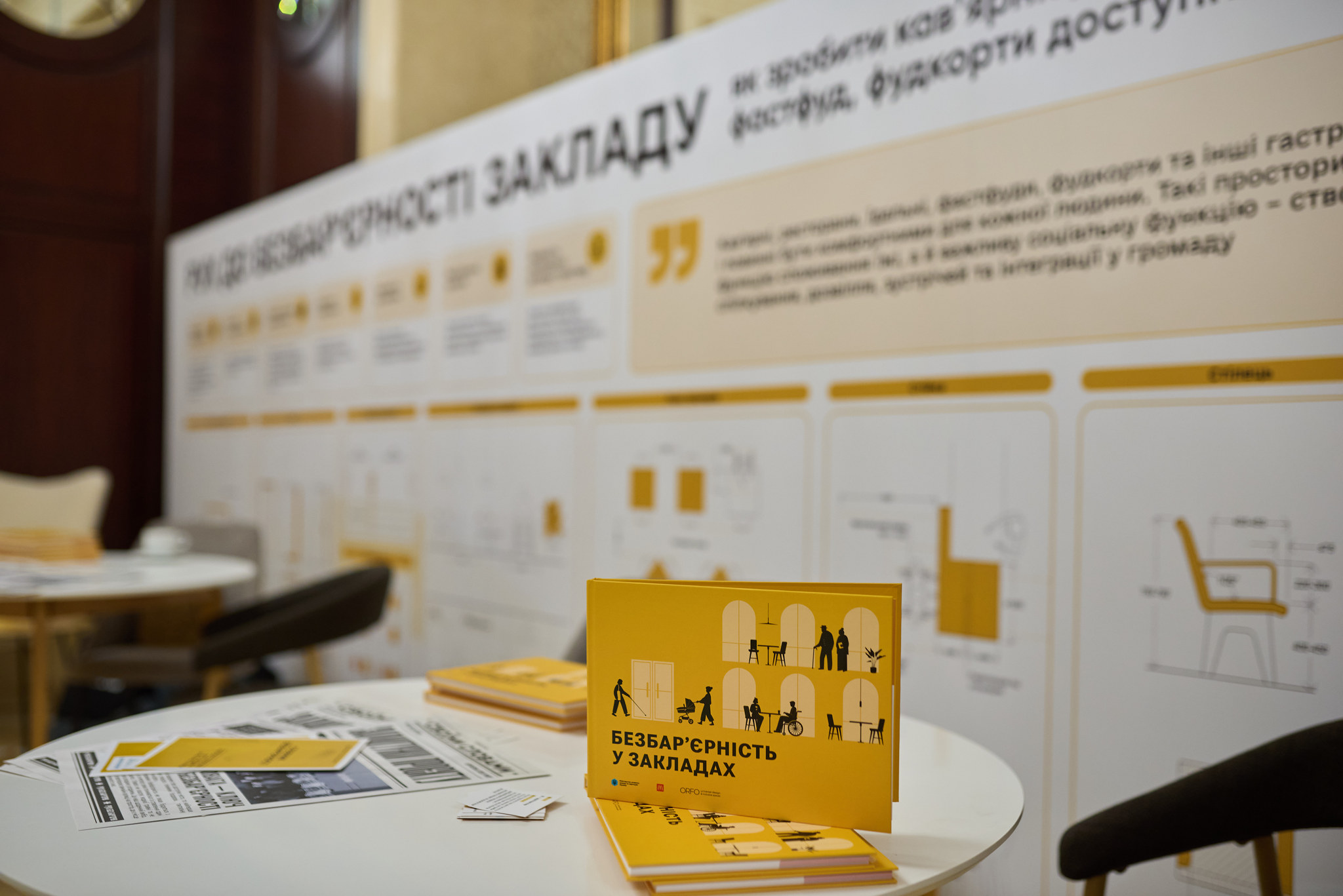
The Ministry for Communities, Territories and Internally Displaced Persons of Ukraine, together with McDonald’s in Ukraine and with support from the League of the Strong NGO, has developed Methodological Recommendations on Accessibility in Food Service Establishments.
The recommendations bring together current regulatory requirements, practical experience and advice from accessibility experts. They avoid complex wording and unnecessary technical terms, instead offering clear diagrams, understandable explanations, key requirements and practical solutions that establishments can apply.
“We see that changes work when we approach them comprehensively. An important part of this approach is cooperation with business. Together with McDonald’s, we developed accessibility guidelines for food service establishments. Importantly, these recommendations were tested together with our ambassadors. They helped check how convenient the proposed solutions really are and whether they work in real life,” said Vitalii Bezghin, Minister for Communities, Territories and Internally Displaced Persons.
The recommendations cover different aspects of accessibility, from the entrance, organisation of space and choice of furniture to sanitary facilities, navigation, communication and staff interaction with visitors.
This is a practical guide for food service business owners, managers and employees. It helps them understand where to start, what to look for and what changes can be introduced step by step.
“If, like me, you own an establishment, are planning to open one or expand, I recommend the Methodological Recommendations from Minregion and McDonald’s. They explain how to create an accessible café, restaurant or canteen and provide clarity on the path to accessibility. This will make your space welcoming to everyone: people with disabilities, veterans, parents with children and older people,” said ambassador and veteran Fedir Samburskyi.
The main goal is to increase the number of accessible establishments and make this a normal part of quality service, so that people with different needs can choose where to go without worrying in advance whether it will be convenient for them.
The guide is available at: https://drive.google.com/file/d/1dHWtSa2KShOvKtmyYCAQ74LVVmVU2QwO/view?usp=sharing